“Many artists are reluctant to litigate, as the legal system can appear daunting. That is why I have written this book.”
“Each time an artist brings a case in court, that case has the potential to expand and define the rights of all artists.”
- GAle Elston
The Rivington School Sculpture Garden and The New York Cultural Affairs Law
Chapter 3
-
B. §106A — Rights of certain authors to attribution and integrity…………………..
C. 17 U.S.C. §101 – Definition of an artwork………………………...…….………………………..
-
A. Jurisdiction and the National Court Structure……………..……….…….………………
B. The Federal Court System…………………………………..…….…..……………………..……….
C. The State Court System……………………………………………..…...…………………..………..
D. Federal vs State Jurisdiction……………………………………..….…...…………………..…….
E. Examples of Jurisdictional Issues and Artists' Rights………..……………….……….
F. The Rivington School’s Sculpture Garden and the New York Cultural Affairs Law……………………………………………………………....…………………..…………………..…………….
G. Philip Pavia’s Ides of March and the Application of Pendent Jurisdiction……………………………………………………..………...…………………..…………………..
H. Hans van de Bovenkamp’s Roadway Confluence and Eleventh Amendment Sovereign Immunity………………………………..…………………..…………………..…………………………………..
-
How Law is Made…………………………………………………….....……………………….…….
The Impact of Case Law based on the Decision of the Honorable Robert W. Sweet U.S.D.J dated September 25, 1995. Pavia v. 1120 Avenue of the Americas et. al. 95 Civ. 1302……………………..……………………….……………………….….……………………...
Preemption……………………………………………………….……………………….……..
Respective Rights Protected; Display vs. Acts……………………………….
Distinctions between VARA and the New York Cultural Affairs Law……………………………………………………………………………………….……………
Ongoing Modified Display is Determined by Judge Sweet to Toll the Statute of Limitations in a Case of First Impression Law Being Made……………………………………….
National Impact of Pavia Decision……………………………………………………...………………………..……………
Copyright History………………………………………………..……………………………….……
Copyright Subject Matter and Scope……………………………………………………….
Elements for Statutory Copyright Protection……..…………………….…………...
Authorship and Originality………………………………………………………………..
Artists Nora Ligorano and Marshall Reese, aka. Ligorano Reese, Wrangle with the Copyright Office…………………………………...………………………...…………….…………………...
Alexei Sundukov v. Jim Shaw and the Question of Independent Creation………………………………………………………………………………...…………..
Fixation …………………………………………………………………………………...………..
Aviva Rahmani’s Blued Trees and the Issue of Citation………………..…
Duration…………………………………………………………………………………...…………....….
Tangible Medium and Copyright Overview by Jenna Jordan…………….......
Fair Use Applied…………………………………………………..………………………...…………..
Dennis Oppenheim v. Walt Disney……………………..……………...……………..
Jeff Koons’ and Richard Prince’s Encounters with Fair Use……….…...
Exclusive Rights of the Copyright Owner………………………………….……………...
Reproduction…………………………………………………………………...…….………....
Adaptation…………………………………………………………………...………….…………
Distribution……………………………...………..……….………………………………………
Public Display……………………………...………..……………………………………………
Limitation on Exclusive Rights………………………………...………………………..
Obtaining Scholarly Permission for Copyrighted Materials………….……...….
Faith Ringgold and Other Artists’ Experiences with Copyright Infringement…………………………………………………………………...……..…………..……...
Contributory Infringement…………………………...…………………………………………...
The Music Modernization Act……………………………………………………..……...……..
The Marrakesh Treaty Implementation Act……………………………..…………..…...
-
A. Providing Notice for a Copyright……………………………...………………………….
B. Registration………………………………………………………..……………………...……..…
C. Deposit…………………………………………………………………………………...………….….
D. Other Types of Ownership………………………………………...…………………….….…
E. Transfer of Ownership……………………………………………...………………….…..…..
F. US Copyright Office………………………………………………..…………………….……....
G. Copyright Royalty Judges…………………………..………………………………..….....
H. Royalty Payments……………………………………………………………………….………...
I. Infringement - Takedown Notices…………………………….……………………....
J. Remedies…………………………………………………………………………...………..……….
K. Exceptions to Liability…………………………………….…………………………….……...
L. Circumvention of Technological Measures…………………………………..……..
M. Penalties……………………………………………………………………………...………….……..
N. Exceptions……………………………………………………….……………………….…………...
O. Statute of Limitations……………………….….……………………………………..……....
-
A. Open Source Copyrights……………………………...………………..……………………..
A History of Open Source Licenses…………………………………..…….……………....
“Copyleft”………………………………………………………………………....………………….……
B. Problems Created by Copyleft Licenses…………………….………………………..
Copyright Violation of Software……………………………..………………………………..
Public Domain Dedication…………………………………….……………………..…………...
-
A. Moral Rights vs Legal Rights…………………..………………………………………....
B. Categories of Moral Rights…………………………….………………..………………...
-
A. Legislative History and Background………………………………………..…...……
B. Applicability & Types of Art Covered………………..……………………………….
C. Berne Convention and VARA in General, Jointly Contributed by Gale Elston & Jenna Jordan……………………...……………...……………...………….…………………………………...……..
D. Steve Tobin’s Trinity Root Waiver…………………………...…………………...…...
E. Exceptions……………………………………………………….……………...…………………
F. Rights Conferred……………………………………………………………...…………..……
Philip Pavia v. DeKooning and Attribution……………………...………….……….
Integrity…………………………………………………………...…………………...…….………
Graffiti Artist PHASE2 and Integrity……………...…………….………………………
G. Protection under VARA…………………...……………………………………………….…
Cohen v. G&M Realty L.P.…………………...…………………...…………………………...
H. Duration…………………………………………………………………...…………………..……..
-
A. Brief Introduction about Constitutional Protection…………………..…….
B. Constitutional Protection of Murals, Satires, and Parodies…………….
C. Limits on Freedom of Expression……………………………..……………………....
D. Rene Moncada and Censorship…………………….……………………………………
-
A. Right of Privacy……………………………………………………...……………………………
B. Right of Publicity………………………………………………………………………………..
-
A. Conversion……………………………………………………………………………………..…...
B. Misrepresentation……………………………………………………………………….…….
C. Breach of Contract…………………………………………………………………………...
D. Unjust Enrichment………………………………………………………………………….....
-
A. Trademark Overview by Jenna Jordan and Gale Elston…………………….
B. Using Trademark to Accomplish VARA Goals…………….…………….………..
C. Elements…………………………………………………………………………….…………..…..
D. History………………………………………………………………………………………………….
E. Subject Matter and Scope……………………………………….…………………………
F. Duration……………………………………………………………….……………………………...
G. Exclusive Rights…………………………………………………………………………………..
H. Registration……………………………………………………………………………….………..
I. Infringement and Related Claims………………………………………………………
J. Statute of Limitations…………………………………………………………………..…..
K. Defenses…………………………………………………………………………………….………..
L. Remedies………………………………………………………………………………………,…….
-
A. Meaning and History……………………………………………………………………………
B. Matter of Anita Glesta v. U.S. General Services Administration……….
C. Artists’ Activism for Environmental Causes: Notable Examples………
D. Could Environmental Art Find Protection Under VARA? The Blued Trees Experiment…………………………………………………………………………………………………..…...
E. International Court Trends Regarding the Socially Engaged Artist by Gale Elston & Jenna Jordan……………………………………………………………………….……………………………………….
-
A. The United Kingdom…………………………………………………...……...……...……...
Copyright……………………………………………………………...……...……...……...……..
Trademark…………………………………………………………...……...……...……...…….….
B. Senegal……………………………………………………………...……...……...……………….
Copyright…………………………………………………………...……...……...……...…….…..
Protection of Folklore …………………………...……...……...……...….…………………
Trademark………………………………………………………...……...……...……...……...…..
“Copywrong” In Senegal: Contributed by Bara Diokhane, Esq……………
-
A. Cultural Repatriation and the Case of the Elgin Marbles by Timothy Caron………………………………………………………………………………………………………………….
B. Legal Considerations………………………………………………….……………………..
C. The Authority of the Ottomans in Athens…………………………………………
D. Whether the Ottomans Gave Elgin the Right of Removal………….……...
E. The Applicability of the Peru-Yale Dispute to the Elgin Marble.……...
F. Moral Considerations……………………………………………………………………….....
Existing and Potential Damage to the Parthenon and the Marbles………………………………………………………………………………………………………
The Likelihood the Marbles Would Have Remained in Athens if not for Elgin’s Actions………………………………………………………………………………………………………
G. The International Trend of Voluntary Repatriation………………….………..
H. International Organizations Committed to Cultural Property Disputes…………………………………………………………………………………
The Intergovernmental Committee for Promoting the Return of Cultural Property………………………………………………..……………………………………………………………
-
A. Background on Blockchain and NFTs……………………………………………….…
B. Blockchain’s Role in the Traditional Art World………………………………….
C. NFTs Create an Opportunity for Social Justice and Disruption of Traditional Art Ownership……………………………………………………………………..…………………………………...
D. Environmental Implications………………………………………………………………….
E. Artists’ Rights…………………………………………………………..………………………….
F. Perpetuation of Racial Disparities in the Metaverse……………………….…
-
A. An Analysis of Ahmed Elgammal Contributed by Kevia McComb….…..
-
Bibliography: Books, Treatises and Artists……………………………………………..
Reports……………………..…………..…………..…………..…………..…………..……...
Case Documents……………………..…………..…………..…………..…………..…....
Legislation…………..…………..…………..…………..…………..…………..……………
Cases…………..…………..…………..…………..…………..…………..…………………….
Relevant State Statutes…………..…………..…………..…………..…………..……………
Pavia Citing Sources, LexisNexis, Shepard’s® report…………..…………..…….
Pavia v. Ave. of the Ams. Assocs. LEXIS 13963…………..…………..…………..….
New York Cultural Affairs Law § 14.03……………..…………..…………..……………..
Visual Artists Rights Act of 1990…………..…………..…………..…………..…………..
Selected Featured Cases
Chapter 2
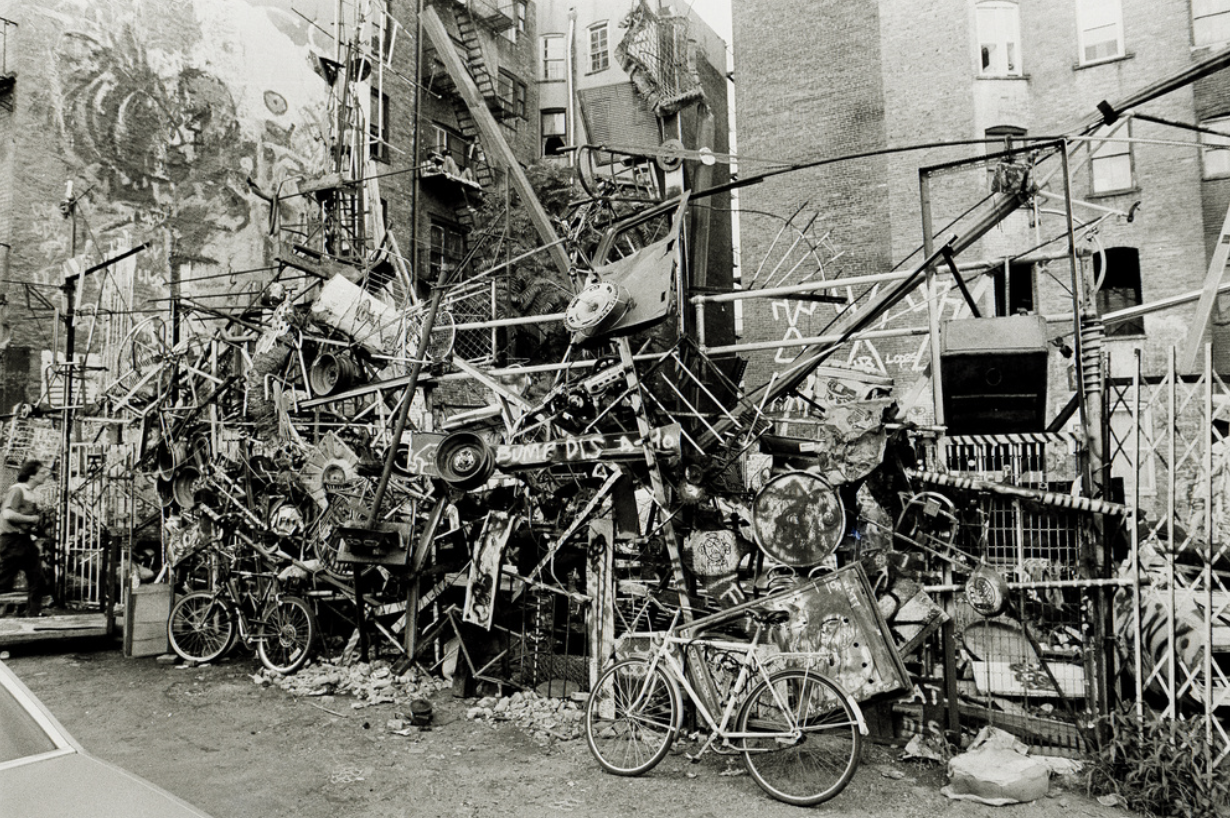
“[…]I was asked to represent The Rivington School (after they had received a Judgment of Eviction) in their efforts to prevent the City of New York from bulldozing the sculpture park and destroying their artwork. My offices prepared an Order To Show Cause (“OTSC”) dated December 9, 1991, to request that the Civil Court, Trial Term Part 52, vacate the Judgment of Eviction issued against The Rivington School and request a stay of the Enforcement of a Judgment of Possession. The Rivington School had stated they had not been served with the Notice of Eviction and the Notice of Petition, which the City of New York claimed it had served on December 5, 1991. The Civil Court of New York has subject matter jurisdiction over civil, housing, and small claims matters in which the damages sought do not exceed $25,000. Since the Order of Eviction was issued from Civil Court, that is where we filed our OTSC. Our OTSC claimed subject matter jurisdiction under Article 14 - Artists Authorship Rights and Section 14.03 of the New York Arts and Cultural Affairs Law, NY CLS Art & Cultural Affairs (1993). It was our decision to immediately try to prevent the eviction, since once bulldozers tore down the sculptures, they would be destroyed.[…]”
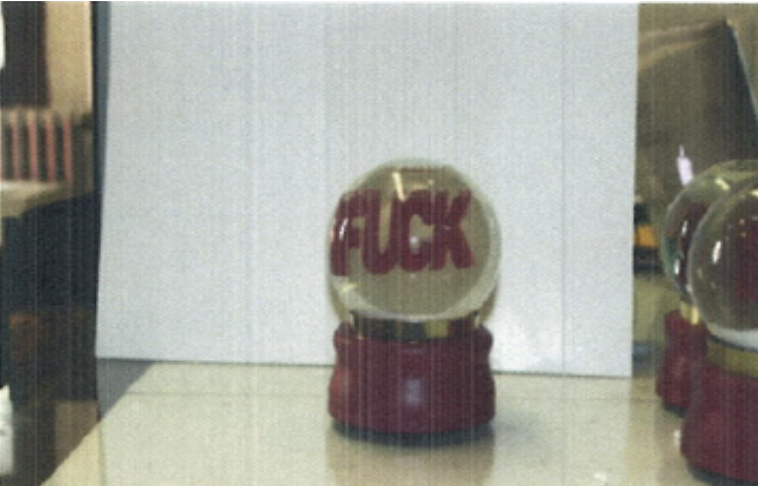
Ligorano Reese’s “F*ck” Snow Globe.
Chapter 7
Philip Pavia v. The Estate of Willem de Kooning and Attribution
“[…]The Plaintiff, noted American sculptor Phillip Pavia, cast sculptures for artist Willem de Kooning. Due to Mr. de Kooning’s mental incompetence, his daughter Lisa and his lawyer acted as conservators for the property. Id. Lisa contended that some of the sculptures cast by Pavia were done by her, not her father. Id. She also claimed that she never commissioned any castings, and had no knowledge of arrangements Pavia said he had with Mr. de Kooning. Id. Representatives of the estate asserted that Pavia tried to pass them off as her father’s, and they challenged the authenticity of the pieces after Pavia sold one that was later given to auction. Id. at C28. It was listed as an “original de Kooning,” and brought in $30,000, but the sale was nullified after the estate told the auction house that the work was Lisa’s.[…]”
Chapter 10
REne moncada v. taito corp., dc comics, inc., and warner- tamerlande publishing corp.
One of the murals that Moncada had created in January 1985 was copied by Defendants Taito Corp, DC Comics, and Warner-Tamerlane Publishing Corp. and used as a backdrop for a video game. At some point prior to January 1988, the Defendants used a photograph that they took of the mural, without the permission of the artist, as a backdrop for a video game known as SUPERMAN. Moncada believed that the video game was distributed widely. In 1988, our offices brought an action in the Supreme Court in the State of New York against the Defendants, seeking damages of no less than $2.5 million. Thereafter, the case was moved to the Southern District of New York and became known as Civil Action No. 90 Civ. 6924 (MBM), alleging that the Defendants violated Moncada’s rights. Since New York Supreme Court and the Southern District could both decide contract and artists' rights issues (the State Court being able to apply the New York Cultural Affairs law and the Federal Court being able to apply VARA), either court could jurisdictionally hand down a judgment for the artist. In this case, after a process of litigation in which Moncada pointed out that his name had been removed and that the video game stated that “all related characters, slogans, and indicia are trademarks of DC Comics, Inc.,” the parties decided to settle the Civil Action No. 90 Civ. 6924, with Defendant Taito agreeing to acknowledge that Moncada is the artist of the mural and owned all rights pertaining thereto and agreeing to no longer sell any SUPERMAN games, in addition to paying Moncada a significant financial sum.
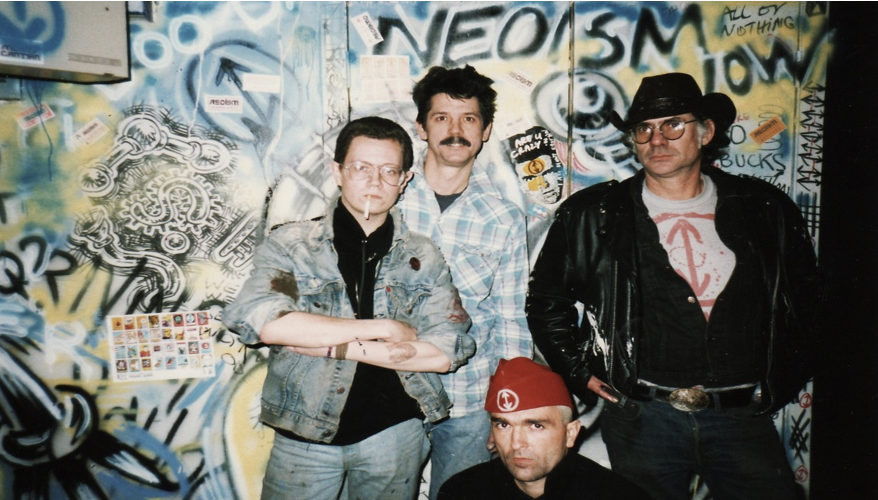
Top: Artists Ed Higgins (with mustache) and Ray Kelly with cowboy hat.
Bottom and following pages: Rivington School Sculpture Garden. Photos courtesy of the artist.
Artists Nora Ligorano and Marshall Reese, aka. Ligorano Reese, Wrangle with the Copyright Office
“[…]B. Analysis of the Work
After careful examination, the Board finds that the Work fails to satisfy the requirement of creative authorship and thus is not copyrightable.
Here, Ligarno Reese admits that the Work's constituent elements—a snow globe, the word “Fuck," and the color red—are not individually subject to copyright protection. Second Request at 6-7. See 37 C.F.R. 202.1(a) (prohibiting registration of “[w]ords and short phrases ... familiar symbols or designs, mere variations of typographic ornamentation, lettering or coloring."); see also COMPENDIUM (THIRD) $ 906.1-4 (uncopyrightable material includes common geometrical shapes such as "spheres," "mere coloration," and "lettering') id. at 313.4(C) (words and short phrases contain a de minimis amount of authorship); $ 313.4(I)-(K) (discussing familiar symbols and designs and color as uncopyrightable material). The question then is whether the combination of elements is protectable under the legal standards described above.[…]”
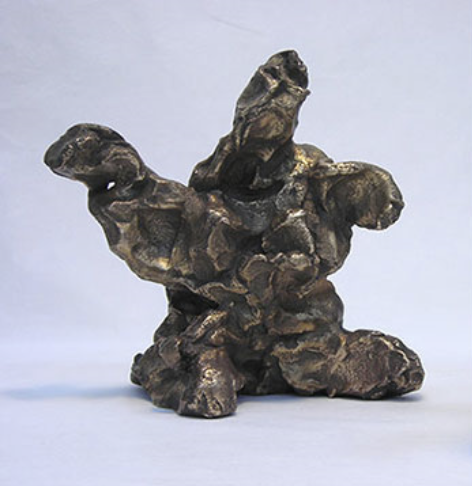
Emory University Stuart A Rose Manuscript Archives and Rare Book Library, Sitting Figure, Studio of Willem de Kooning
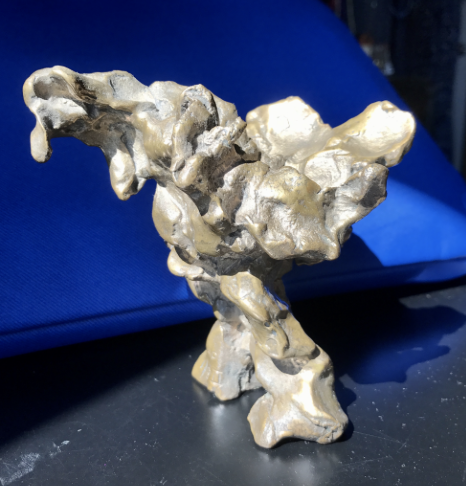
Emory University Stuart A Rose Manuscript Archives and Rare Book Library, Standing Figure, Leda and Swan, Studio of Willem de Kooning
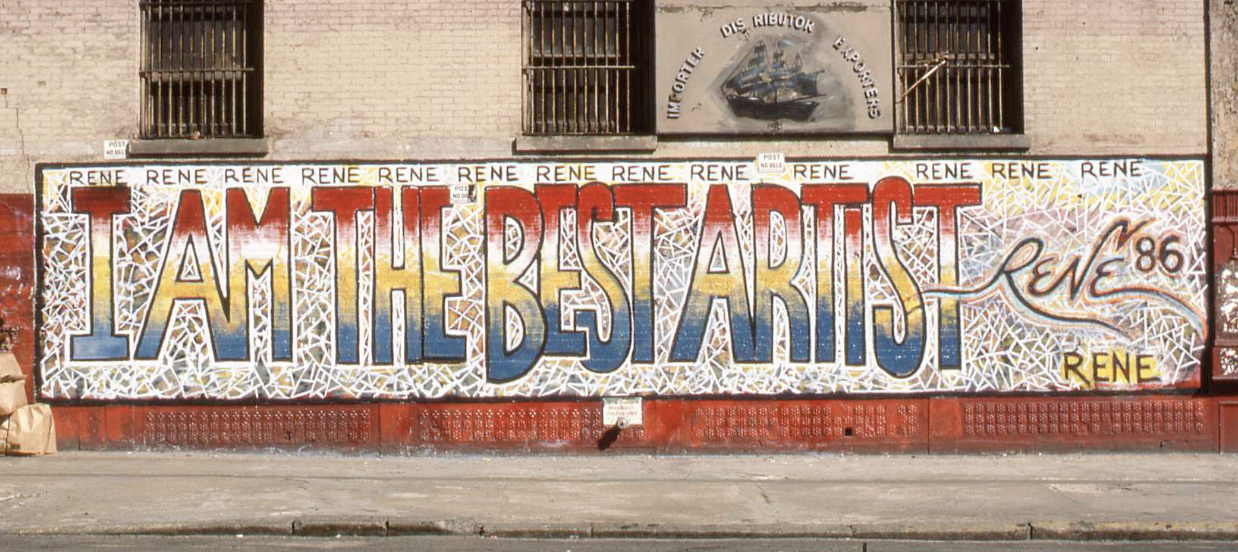
Mural painting, René Moncada, West Broadway between Spring and Broome Streets, 1986